– Italian version on page 2 –
Gold, opulence, sensuality, floral motifs, and pared-back geometries sweep through Vienna at the end of the nineteenth century. A spirit of renewal is in the air, ready to transform every art form, from graphic design to architecture. At the heart of this transformation is a trio of two architects and a painter who, in 1903, establish the Vienna Secession with the support of their mentor Otto Wagner, shaping a distinctive creative legacy that remains alive today.

Still feeling the effects of the financial crash of 1897, Vienna enters the final years of the nineteenth century teeming with ideas, creativity, independence, and change. The development of the Ringstrasse, grand monuments in revival styles, and the underground railway are just some of the signs of this transformation. Academic conventions are rejected in favour of a new creative energy: youthful, confident, and fresh. This is Jugendstil, the “style of youth.” Modernism emerges, ushering in a new era in art.
At its roots stands Otto Wagner, the architect who trained the movement’s leading figures. Following a distinguished academic career, he begins gaining international recognition in the 1890s through his projects and publications. His rigorous understanding of technical and social realities gives way to a romantic imagination, drawn to the radical impulses of the new anti-academic movement.
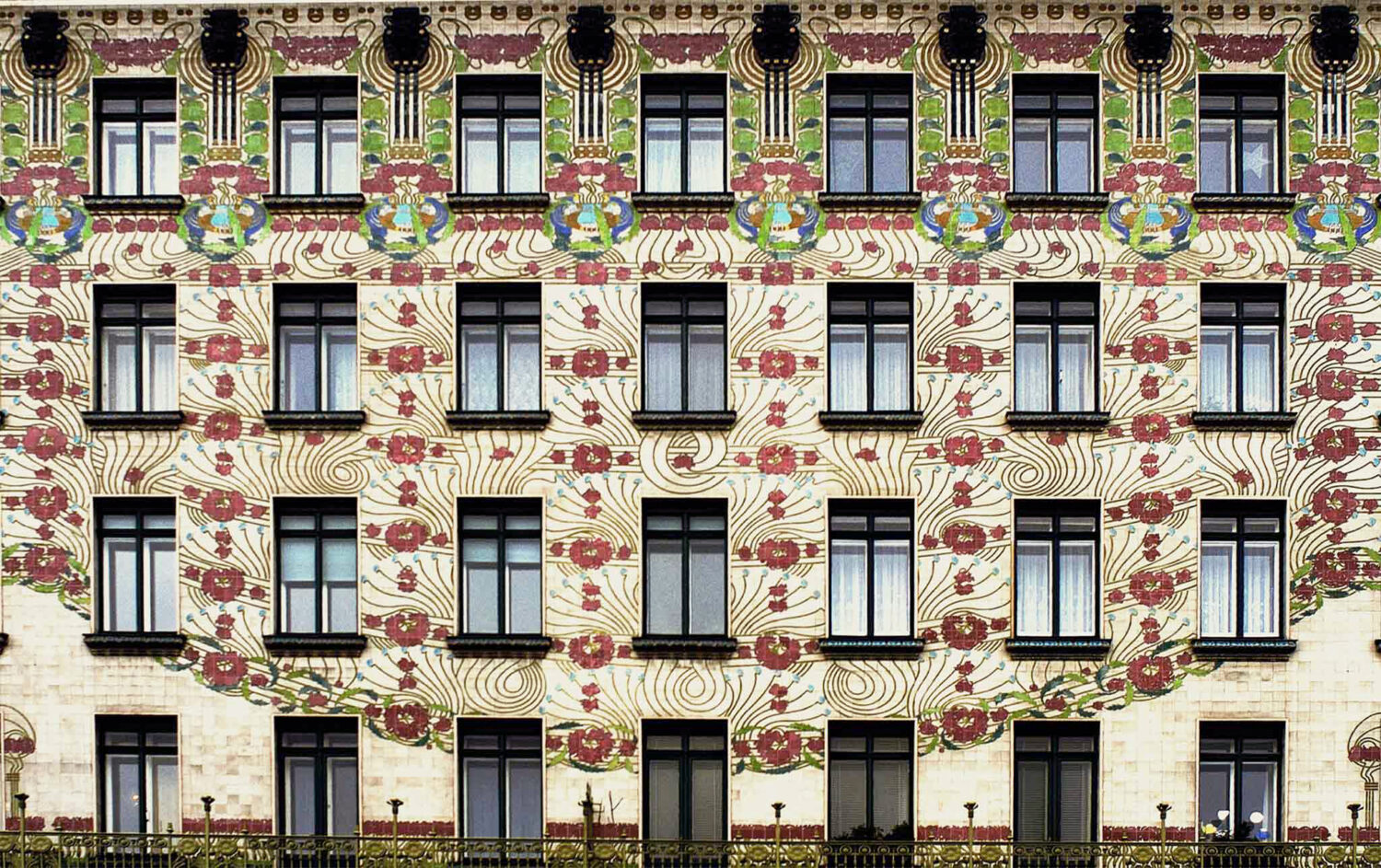
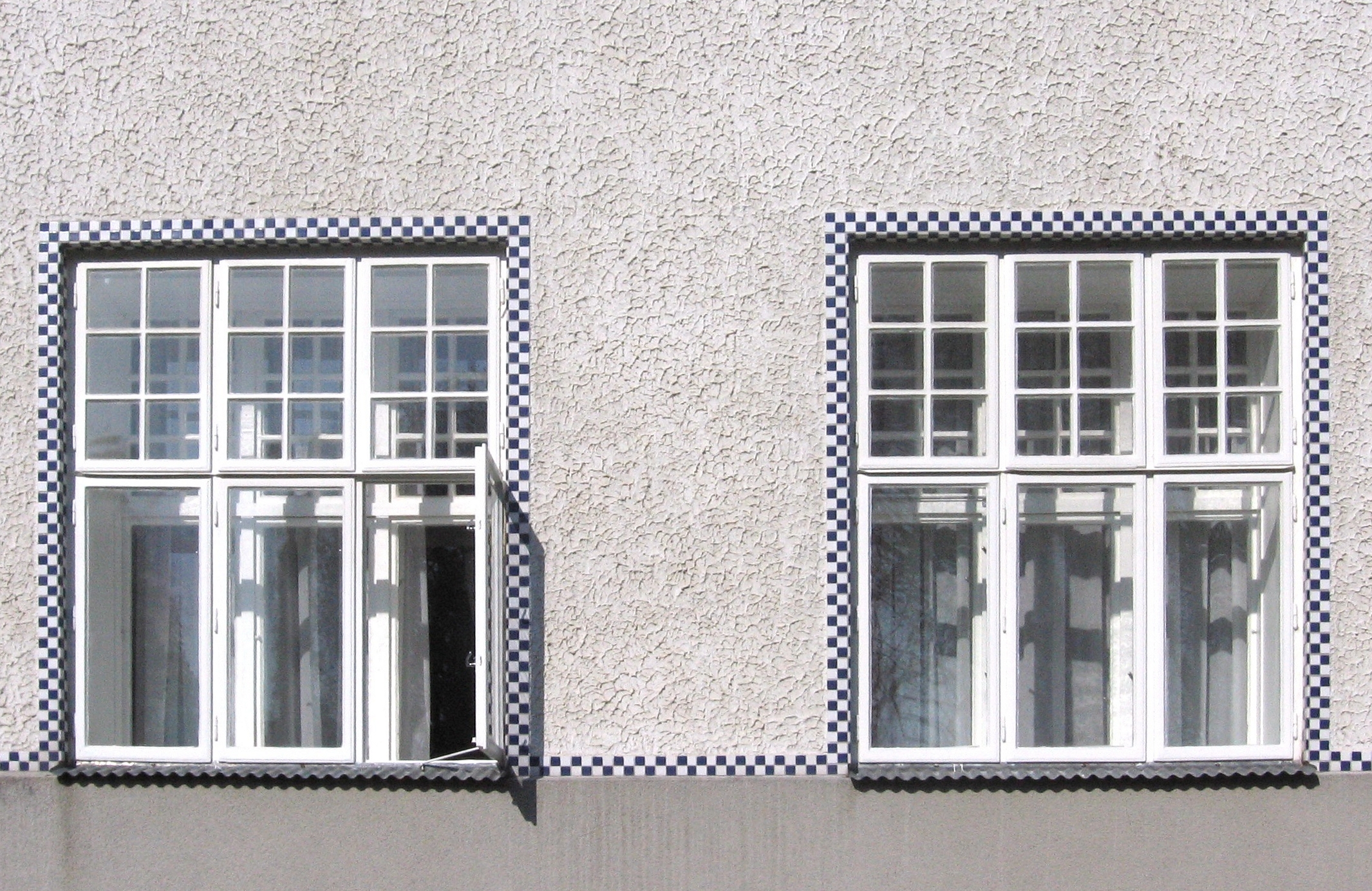
Joseph Maria Olbrich and Josef Hoffmann, Wagner’s assistant and student respectively, join forces with the revolutionary spirit of Gustav Klimt to found the Vienna Secession in 1897. Wagner expresses his sympathy for the movement through the abstract floral ceramic decoration of the Majolikahaus façade. Its uniform ornament conceals a more powerful message: the elegant building’s flat façade dissolves the hierarchy between floors, an idea reinforced inside by the introduction of a lift, giving each level equal residential value. Architecture is no longer the exclusive preserve of the bourgeoisie: it is designed for ordinary people too.

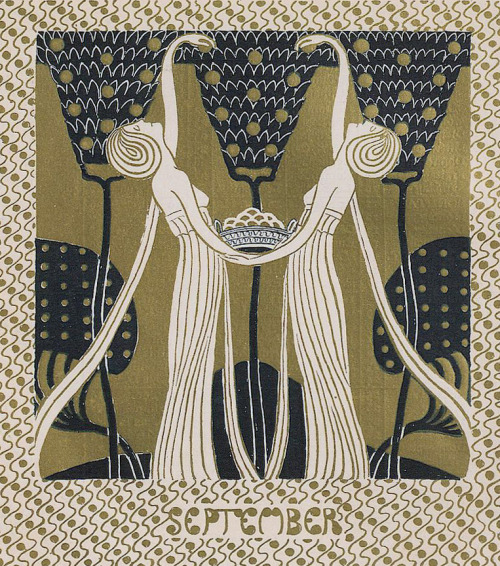
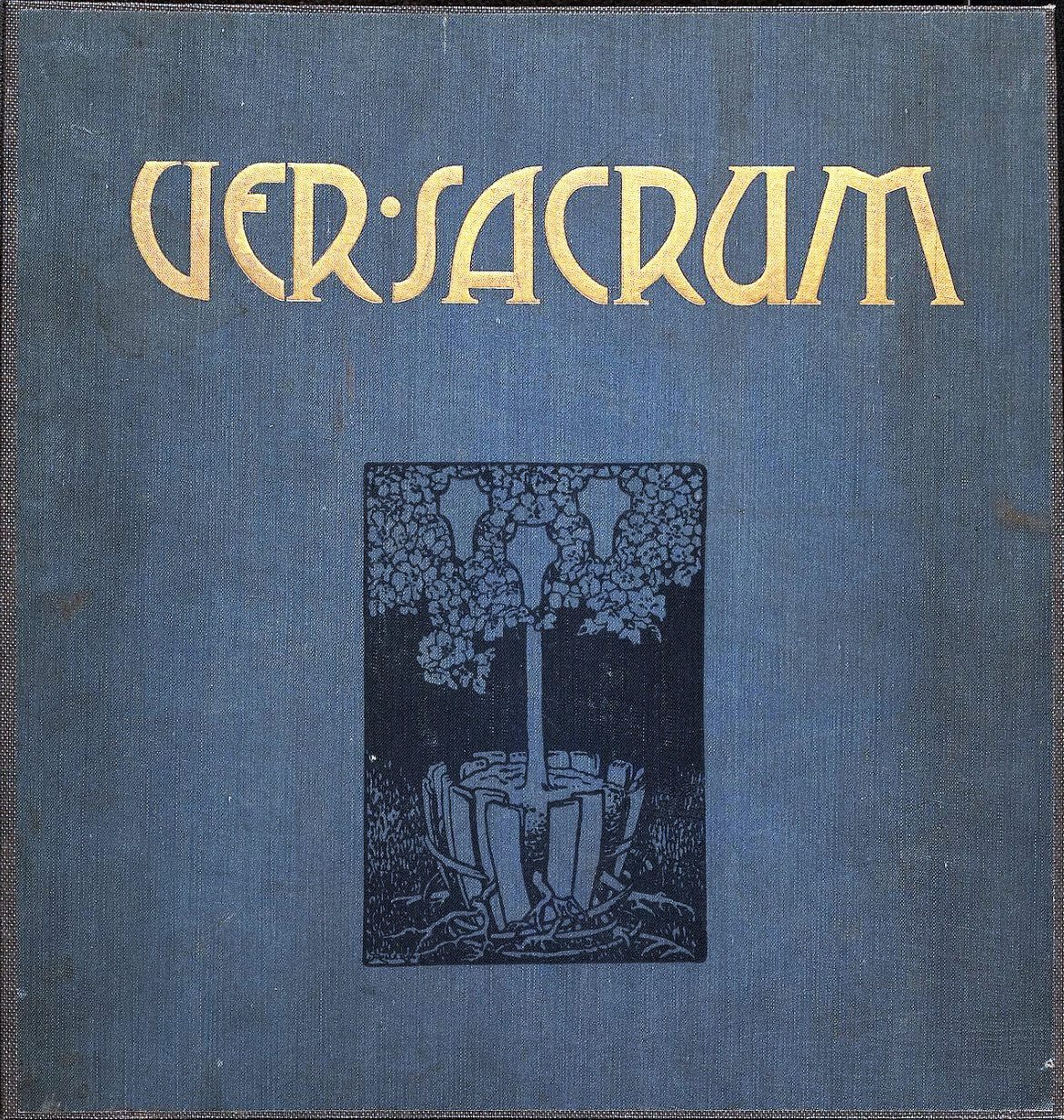
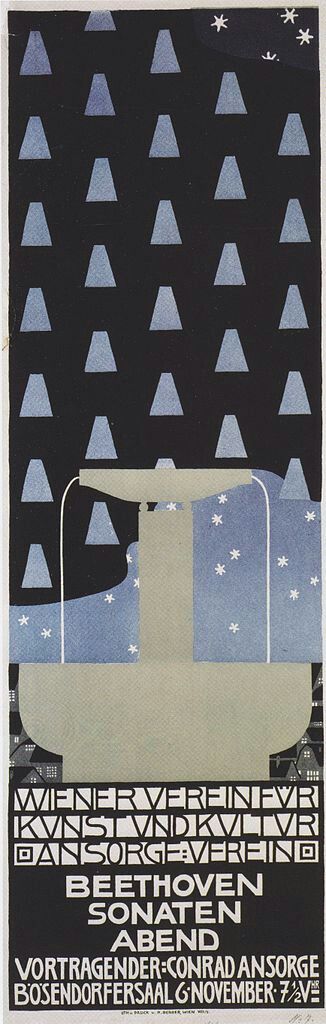
In this atmosphere of exuberant creativity, architects, graphic designers, painters, and other artists come together in 1898 to found Ver Sacrum, the “Sacred Spring” of art. A symbol of organic vitality appears on the first issue’s cover: an ornamental shrub whose living roots burst through the earth beneath it. The format reflects the visual language of the time: a square publication with a compact, simple, and practical typographic layout. Every art form finds a voice within its pages: illustration, poetry, graphic design, and avant-garde design objects.
This creative wave calls for more than the printed page. It also needs physical spaces in which to exhibit and express the Symbolist unity of the arts: the ideal of total art.
The Secession Building is born. Initially conceived by Klimt, the project is ultimately realised by Olbrich around a firmly square plan, crowned by four corner pylons supporting a canopy of golden leaves. Locked in an endless embrace, they embody the fusion of structure and ornament.

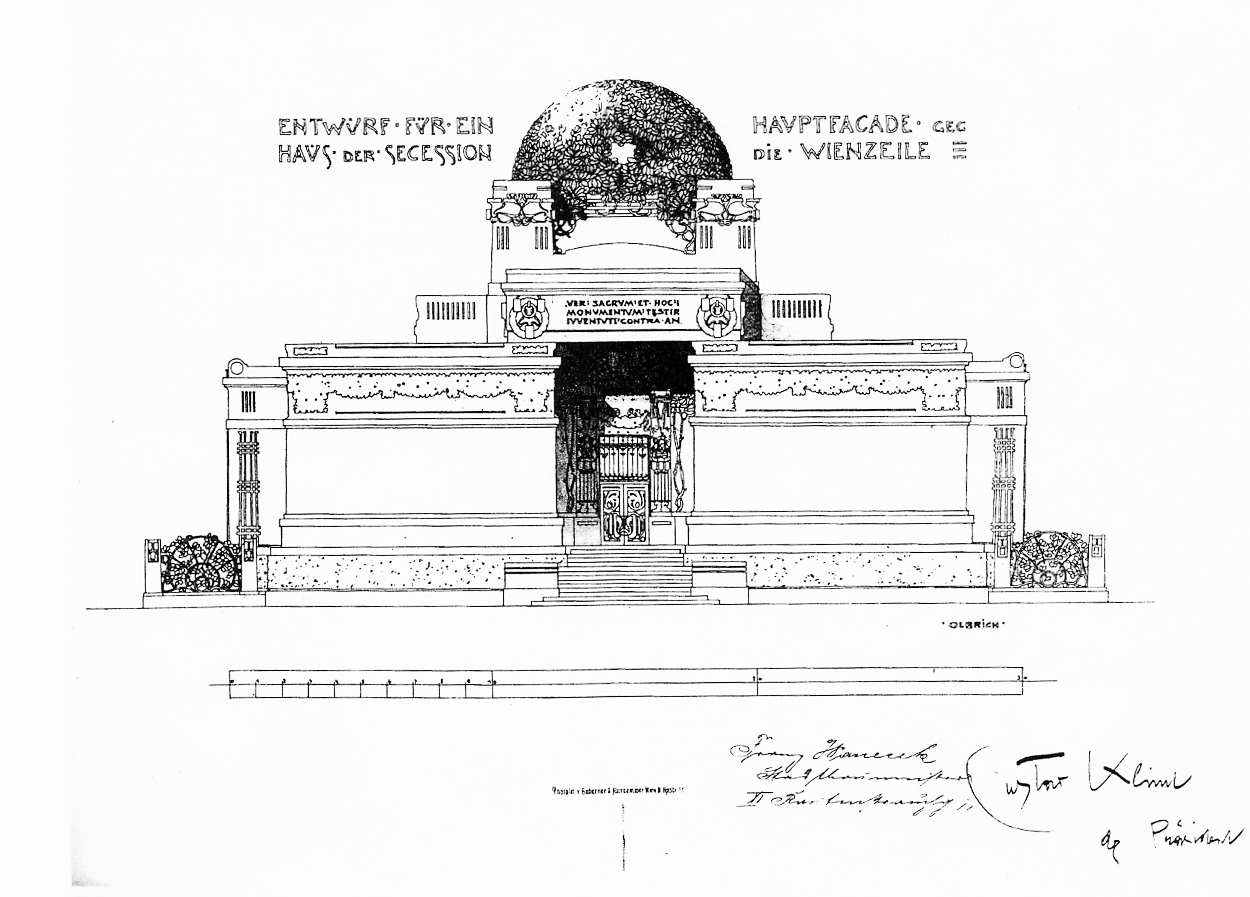

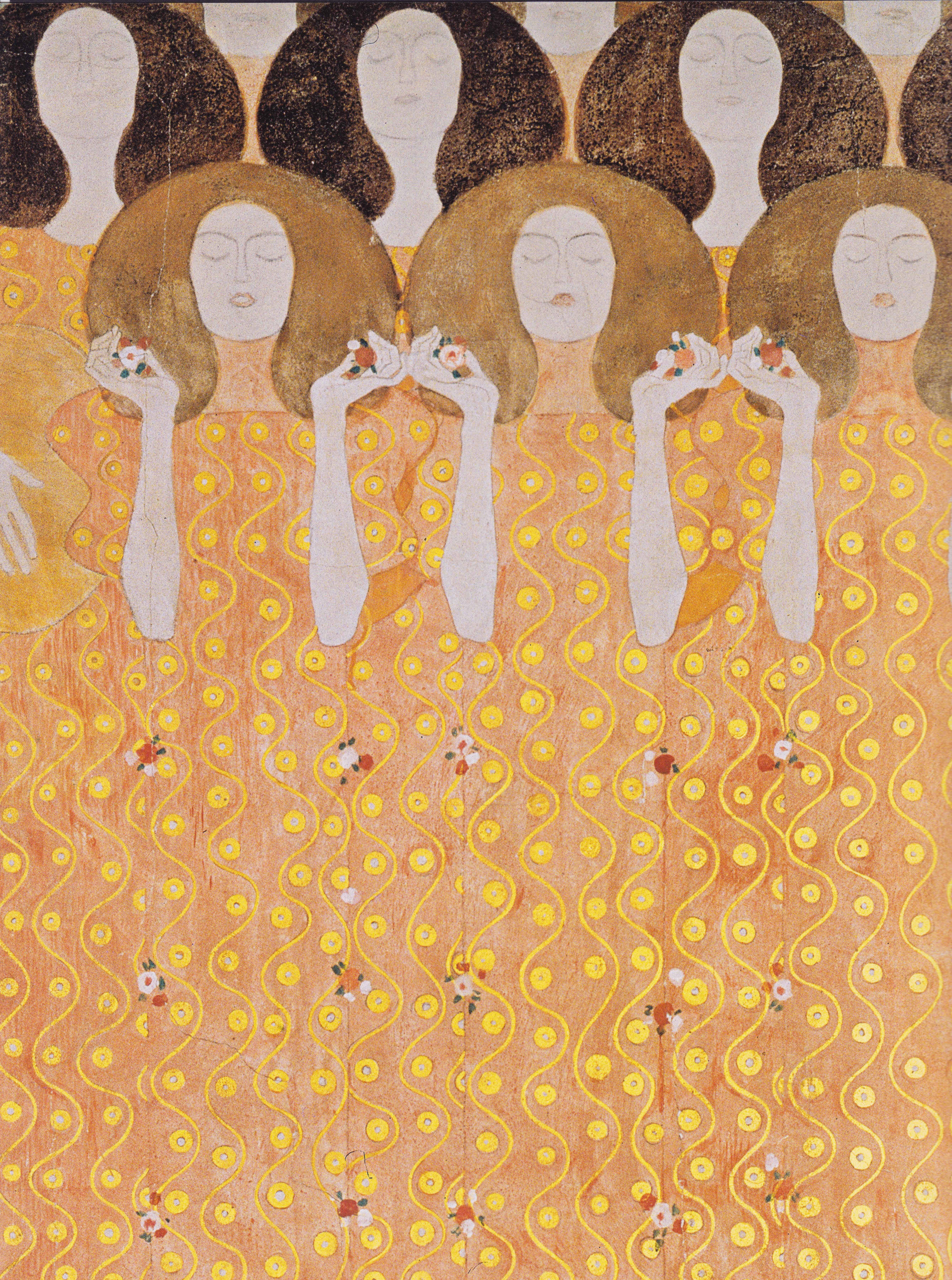
Flat planes give the building a rigorous sculptural form: Jugendstil is pared back without losing its fairy-tale quality. Inside, Beethoven is celebrated in an entire frieze by Klimt, rich in symbolic references to life, eros, and thanatos, themes widely explored by Freudian psychoanalysis during these same years.



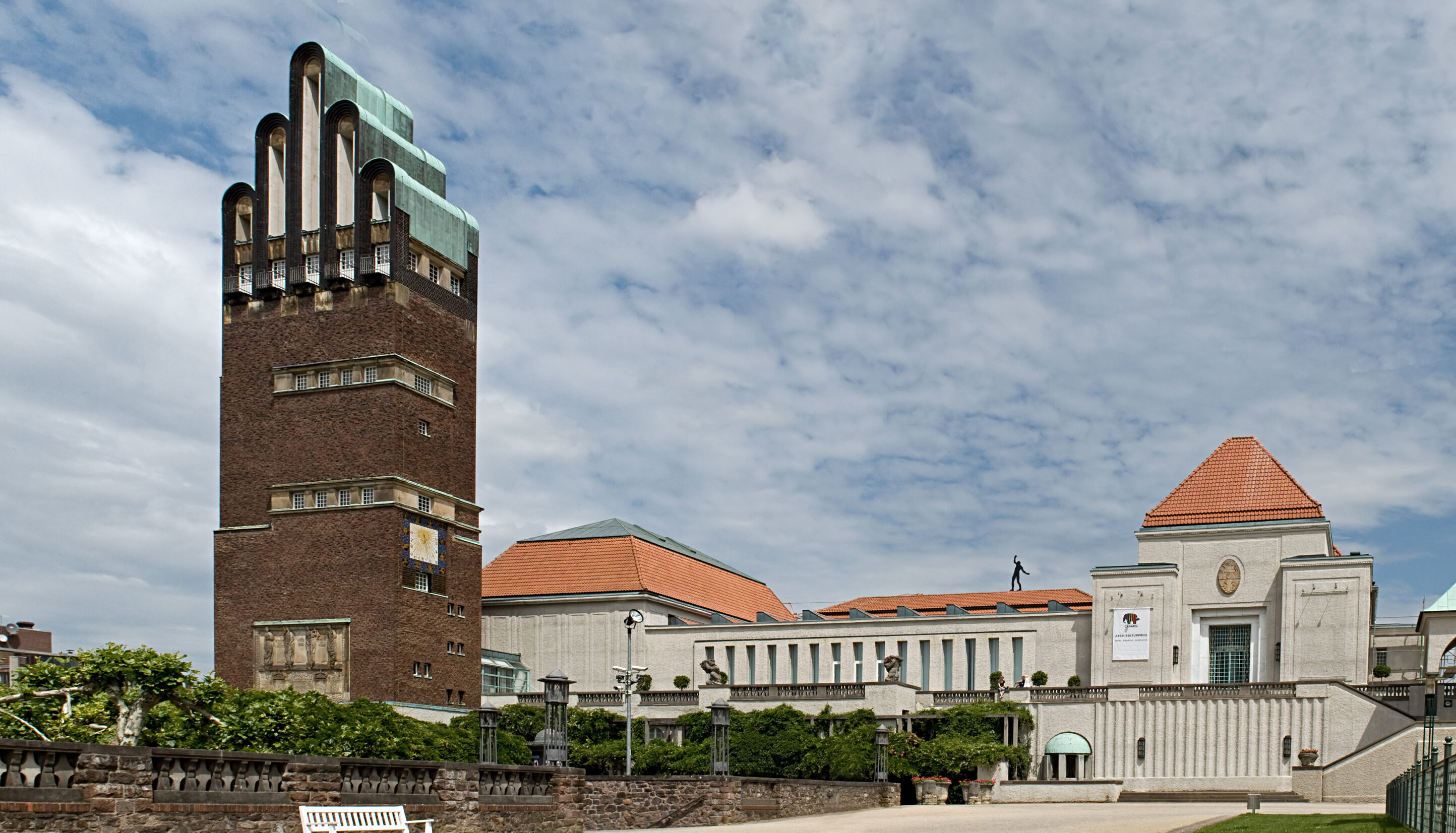
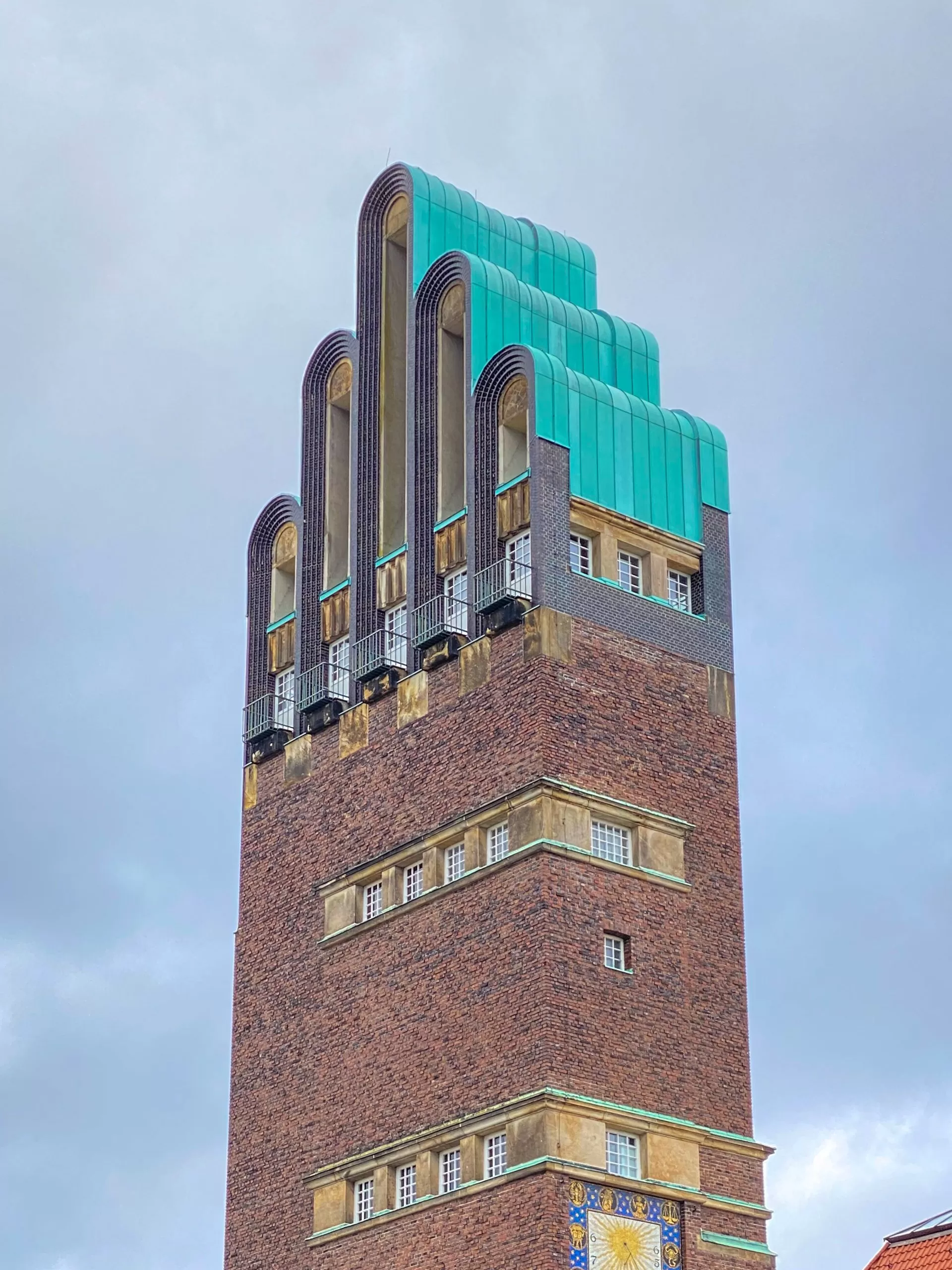
The search for expressive form takes shape in the ambitious Mathildenhöhe project in Darmstadt. Set above a water reservoir, the artists’ colony crowns the city, forming a primordial complex amid dense foliage and shifting colours.
The creative explosion is underway. Minds and hands work together, giving rise to new creative voices whose ideas first intersect and then diverge. Hoffmann succeeds Olbrich as the Secession’s leading architect. His visual language is more classical and rooted in Wagner’s work. He favours refined furniture with clean lines, pursuing a monochromatic ideal:
I am particularly interested in the square as such and in the use of black and white as the dominant colours, since these clear-cut elements have never appeared in earlier styles.

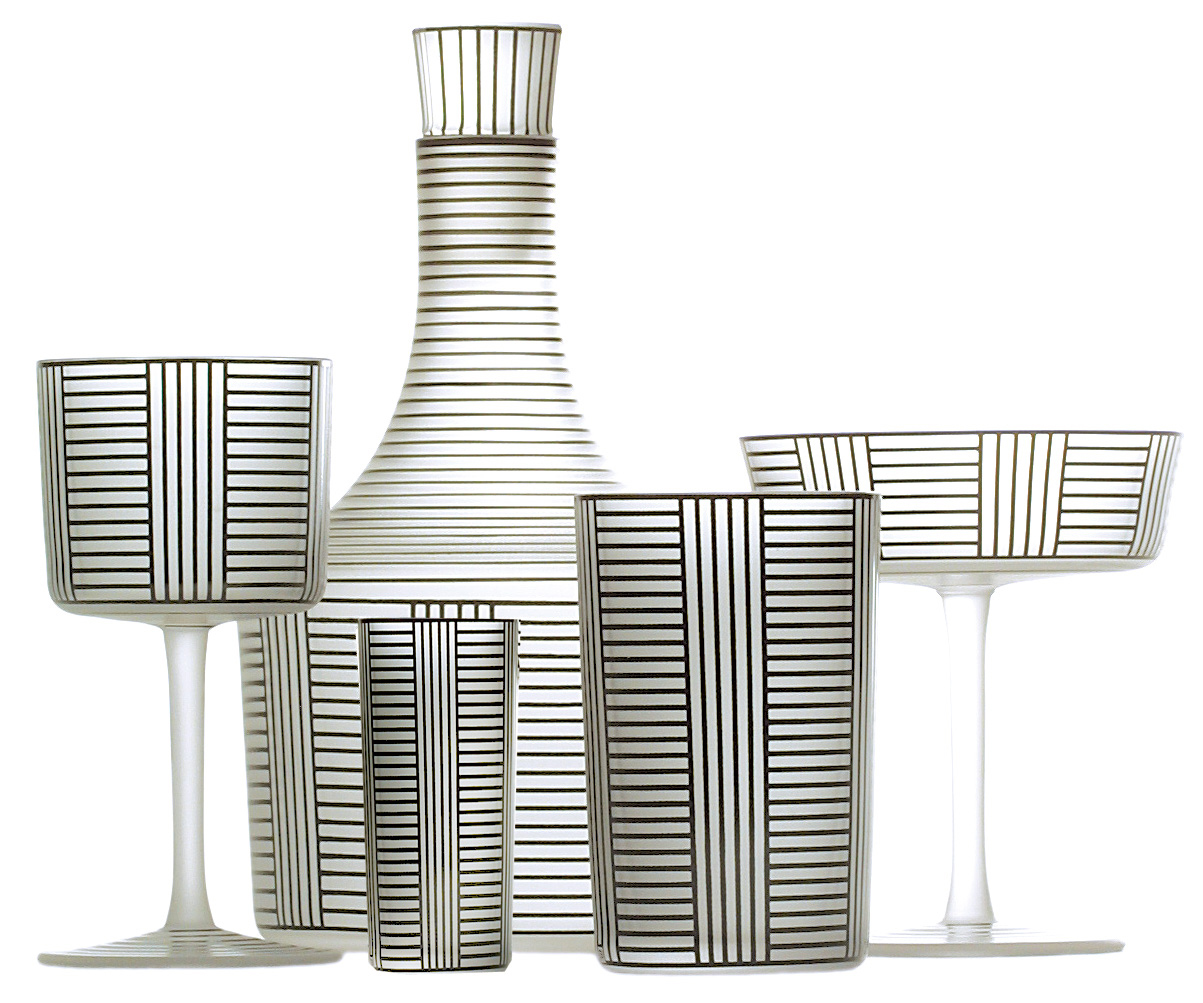
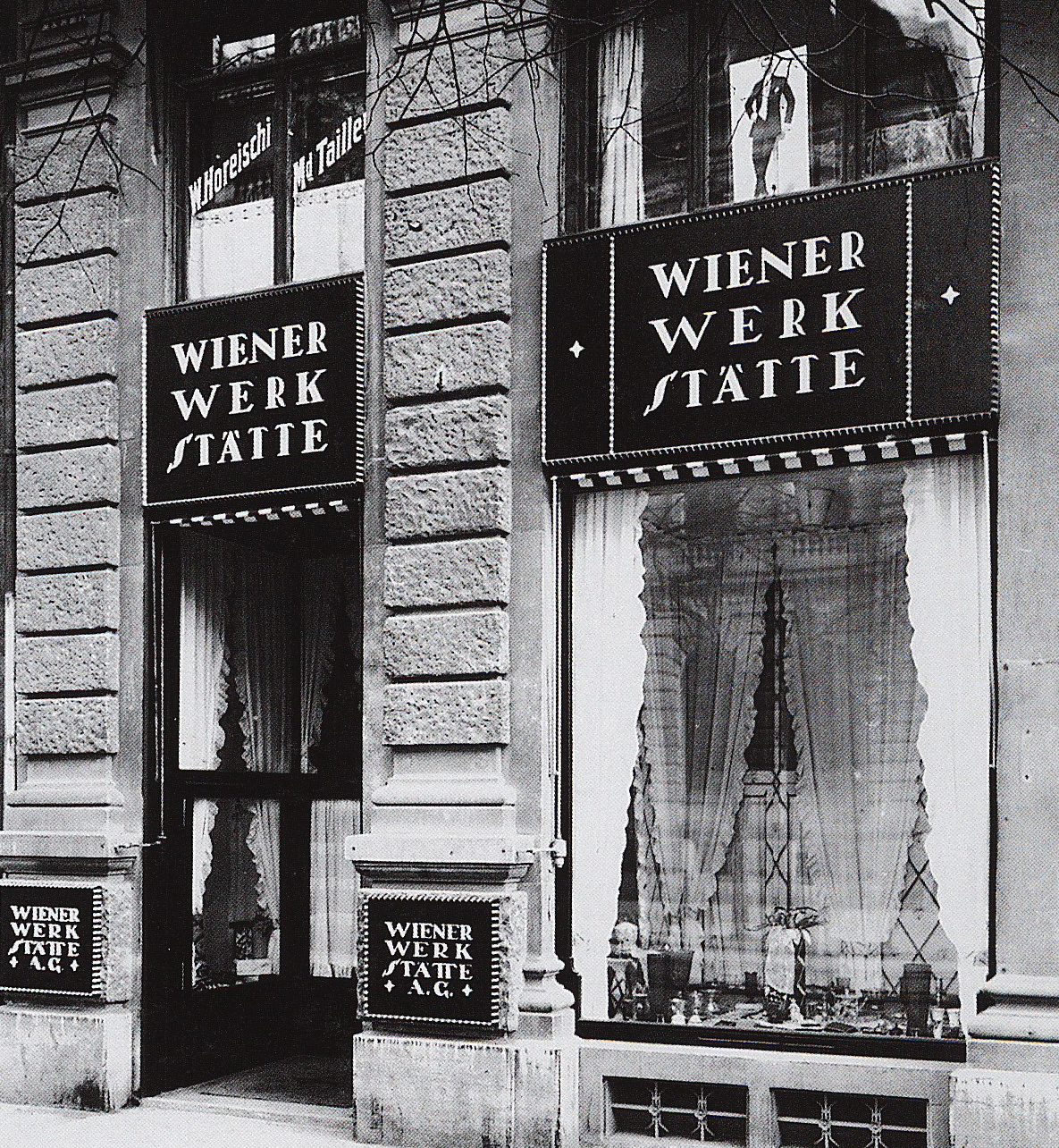
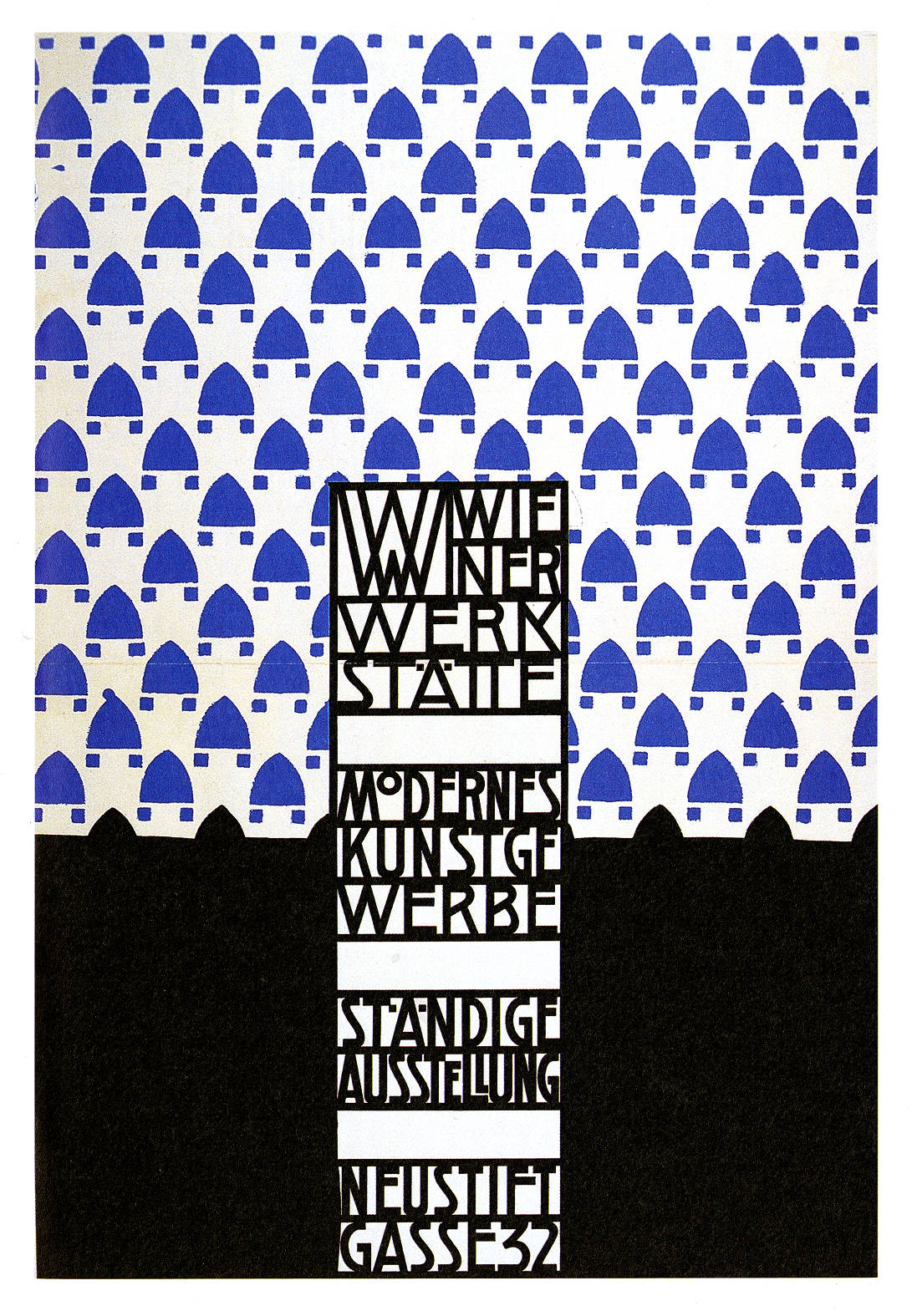
His efforts turn towards the craft production and sale of high-quality household objects. To this end, he establishes the Wiener Werkstätte, the Vienna Workshops, alongside Koloman Moser. Their work extends beyond the visual arts to architecture and design, experimenting with materials such as concrete, glass, and metal.
Hoffmann’s versatility informs his designs for the Purkersdorf Sanatorium and his greatest masterpiece, the Stoclet Palace in Brussels. Here, the refined craftsmanship of Wiener Werkstätte objects finds expression in the architecture’s pared-back, atectonic forms. The walls seem to dematerialise into broad, thin, lightweight sheets, like the surfaces of tin boxes, joined at the corners by metal bands protecting their edges. Every element contributes to a unified vision: from wall coverings to curtains, from walls to chairs, architecture, painting, and design exist in complete symbiosis.

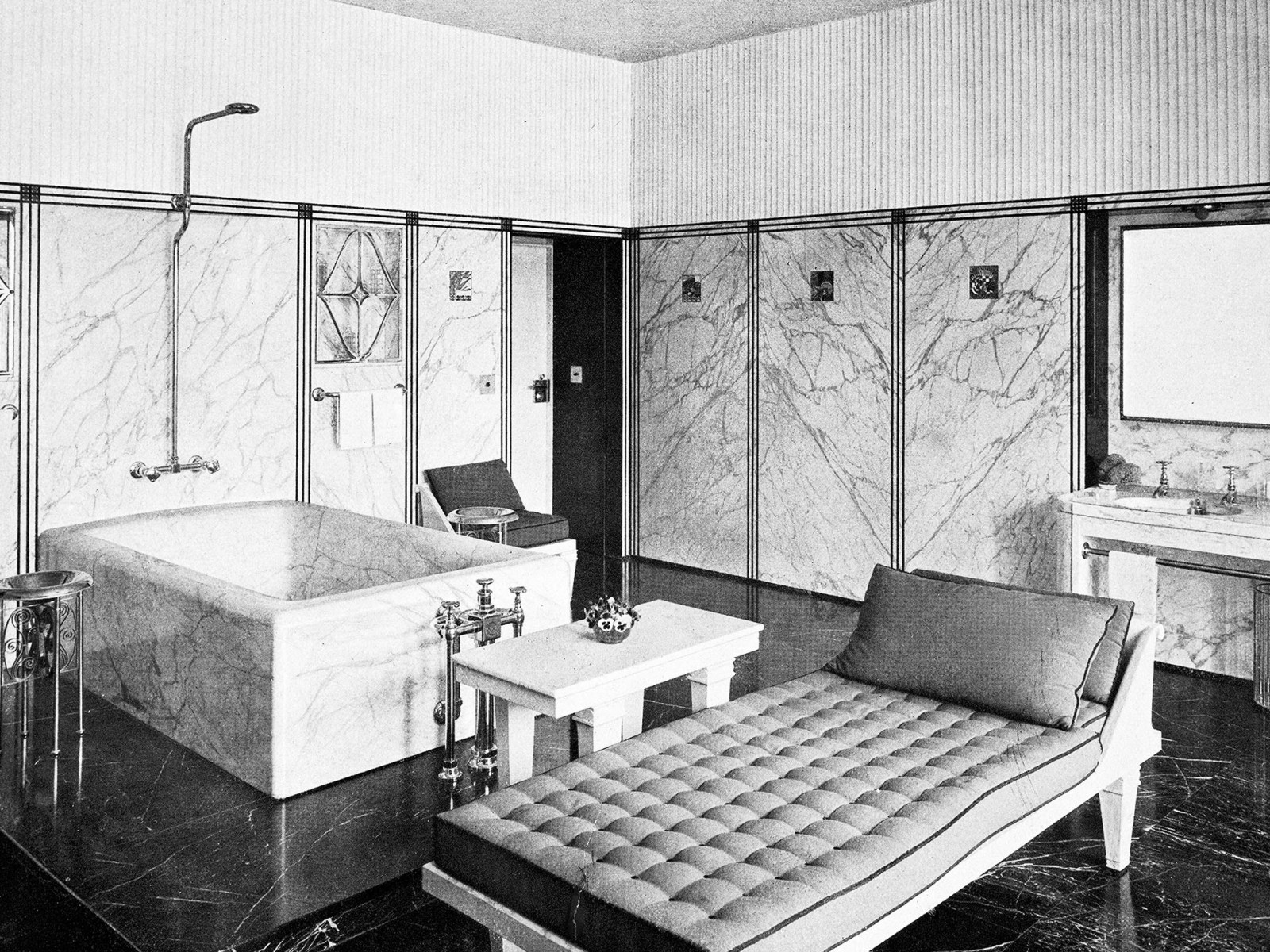
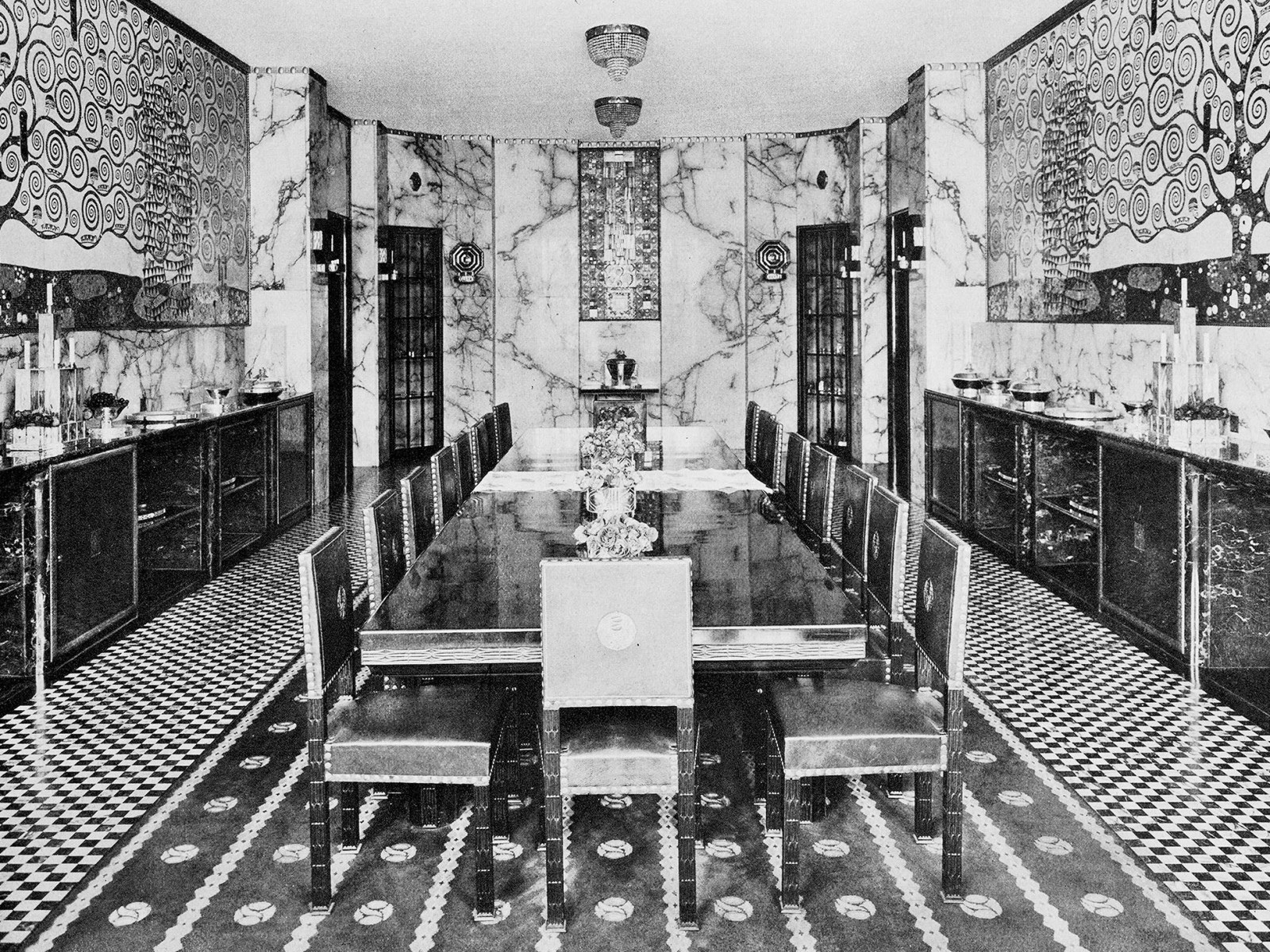

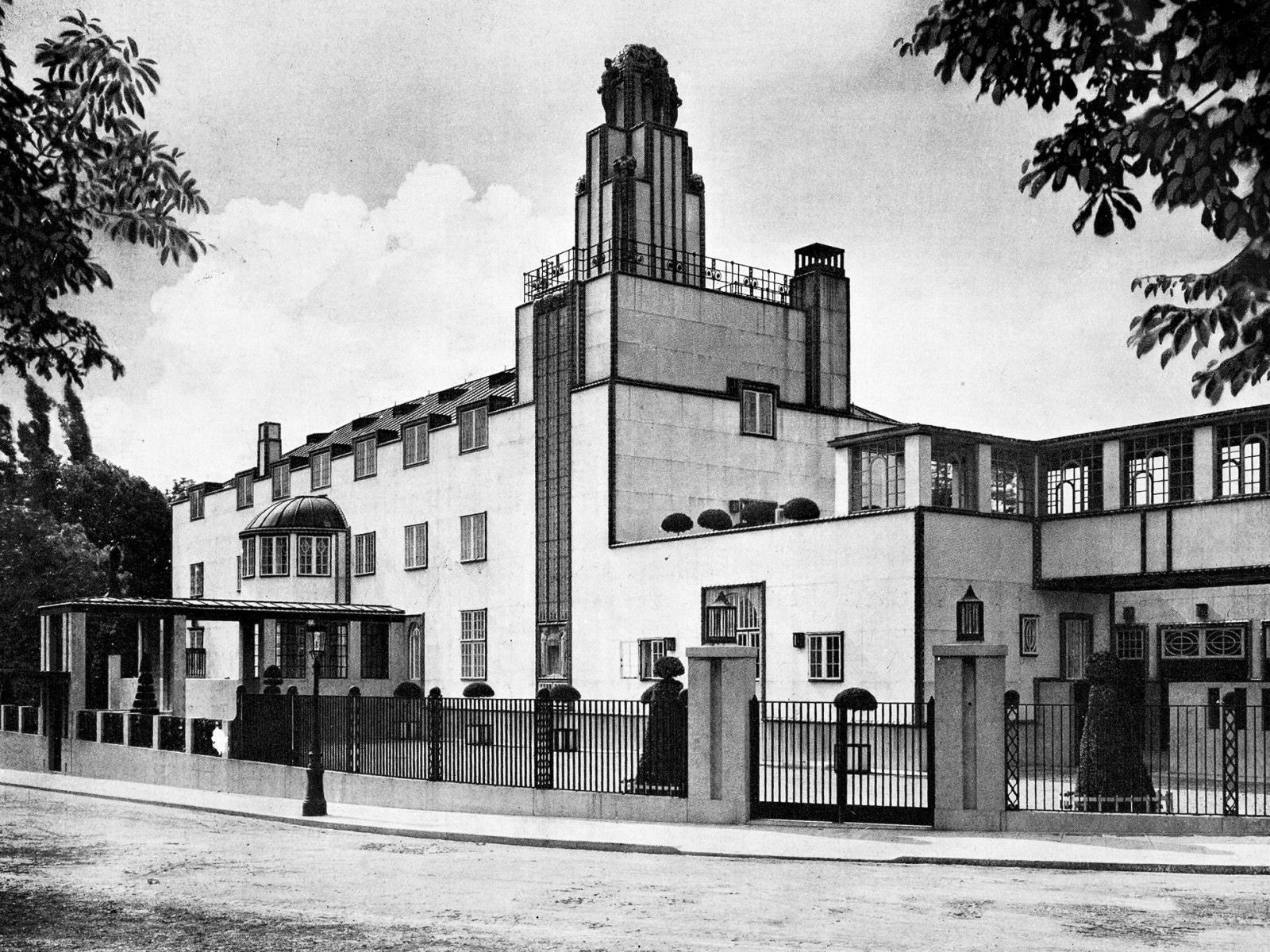
By the early twentieth century, a neoclassical aesthetic is already emerging, while floral motifs begin to fade. In 1905, Hoffmann, Moser, and Roller break away from the original movement.
In painting, experimentation takes a more radical turn in 1907 with Egon Schiele and Oskar Kokoschka, who follow the path opened by their mentor Klimt. Disillusioned, Klimt returns to a more academic painting style.
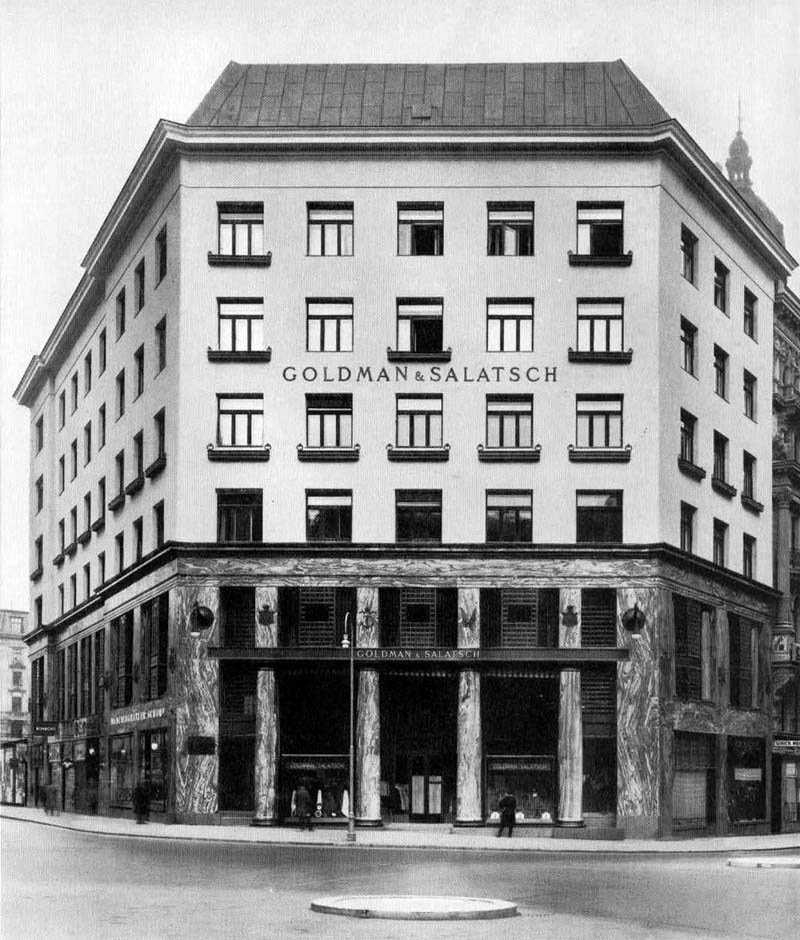
At this point, their work comes closest to that of one of their fiercest critics: in 1908, architect Adolf Loos publishes Ornament and Crime. Early rationalism is taking shape.