
– Versione italiana a pagina 2 –
Born in Munich in 1897, Adelgunde Stölzl was soon known by the diminutive Gunta, a name that would represent her official signature and accompany her throughout her artistic career.
She grows up in a family where her father, a teacher and president, immediately recognizes her talent and encourages her to cultivate her vocation.
Between 1915 and 1917 he studied at the Munich School of Arts and Crafts where he had the opportunity to try his hand at various artistic techniques: from decorative painting to ceramics, before moving on to glass painting and immersing himself in the study of art history.
The outbreak of the First World War did not halt either her passion for art or her desire to continue creating: between one intervention and another as a volunteer nurse, temporarily interrupting her studies and continuing to document everything she experienced within the pages of her diary. Between 1917 and 1918 this was filled with words, lithographs and watercolours of the landscape surrounding it during the conflict.
In the autumn of 1919, Gunta began attending the Bauhaus in Weimar, a dynamic environment in which the relationship between students and teachers, as well as social life, played a central role. From the pages of his diaries, the enthusiasm with which he lives this new experience clearly emerges, surrounded by a climate of intense artistic experimentation and continuous creative discussion.
From the diary entries of October 18, 1919, regarding the Bauhaus in Weimar Gunta writes:
“Just two days, and how intense they’ve already been. The first evening was a wonderful celebration; you could immediately feel the spirit that animates this place, a celebration to celebrate the inauguration of the dining room. (…) The people who came here to create seriously are still all strangers, but they long to get to know each other; is there a better way to do this than simply spending time together happily, dancing, and playing?”

The Bauhaus
Founded in Weimar in 1919 by Walter Gropius, the Bauhaus, meaning “house of building,” was an art school whose aim was to bring art and industry together and bridge the divide between artistic design and production.
Students combined preliminary courses exploring form and materials with practical, theoretical and artistic workshops led by prominent figures of the time, including Paul Klee and Wassily Kandinsky.
In 1925, the Bauhaus moved to Dessau, where it became a Hochschule für Gestaltung, or higher school of design. During this period, its teaching placed greater emphasis on architecture and industrial design, supported by the contributions of teachers such as Hannes Meyer, Mies van der Rohe and Josef Albers.
Between 1932 and 1933, the school underwent further changes: it relocated to Berlin and eventually closed under pressure from the Nazi regime, despite its success and considerable influence.
Yet the Bauhaus legacy continued beyond its closure. Many of its leading figures, including Gropius, Mies van der Rohe and Albers, emigrated to the United States, helping spread its principles internationally and profoundly influencing modern architecture and design.
Gunta and the Bauhaus
Her relationship with the Bauhaus did not end with her studies: in 1920, Walter Gropius asked her to lead a course exclusively for women, and Gunta accepted.
Over the following years, she drew inspiration from the aesthetic of Paul Klee and Wassily Kandinsky, abstract painters whose work strongly influenced the patterns of her rugs and tapestries from 1923 onwards.
That year she passed the qualification examination as a weaver and, at the invitation of Johannes Itten, founded and directed the weaving workshops in Ontos near Zurich. In 1925, the Weimar Bauhaus was forced to move to Dessau, a city in eastern Germany and part of the state of Saxony-Anhalt, due to local political pressure, and Gunta followed Gropius in this move.
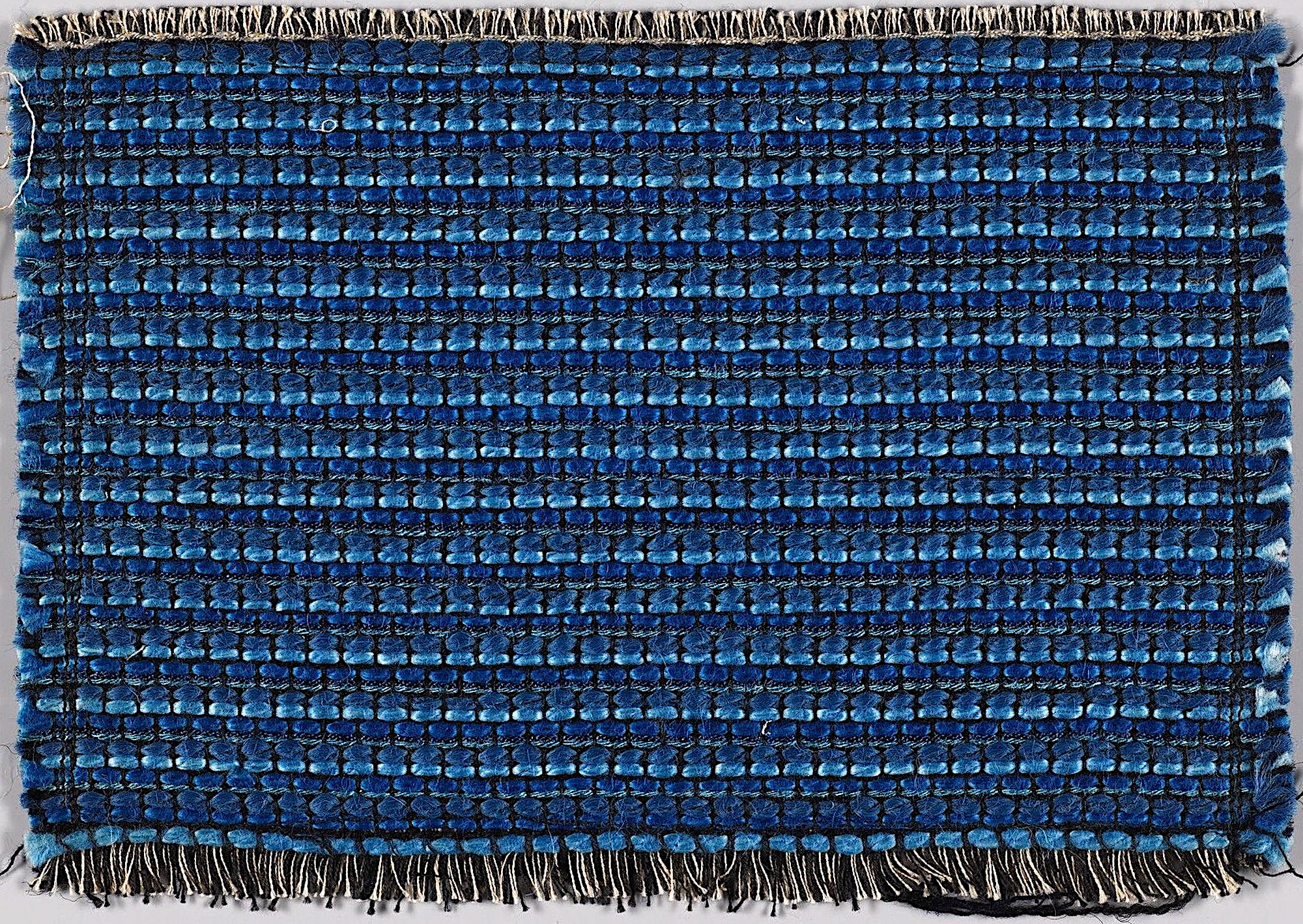
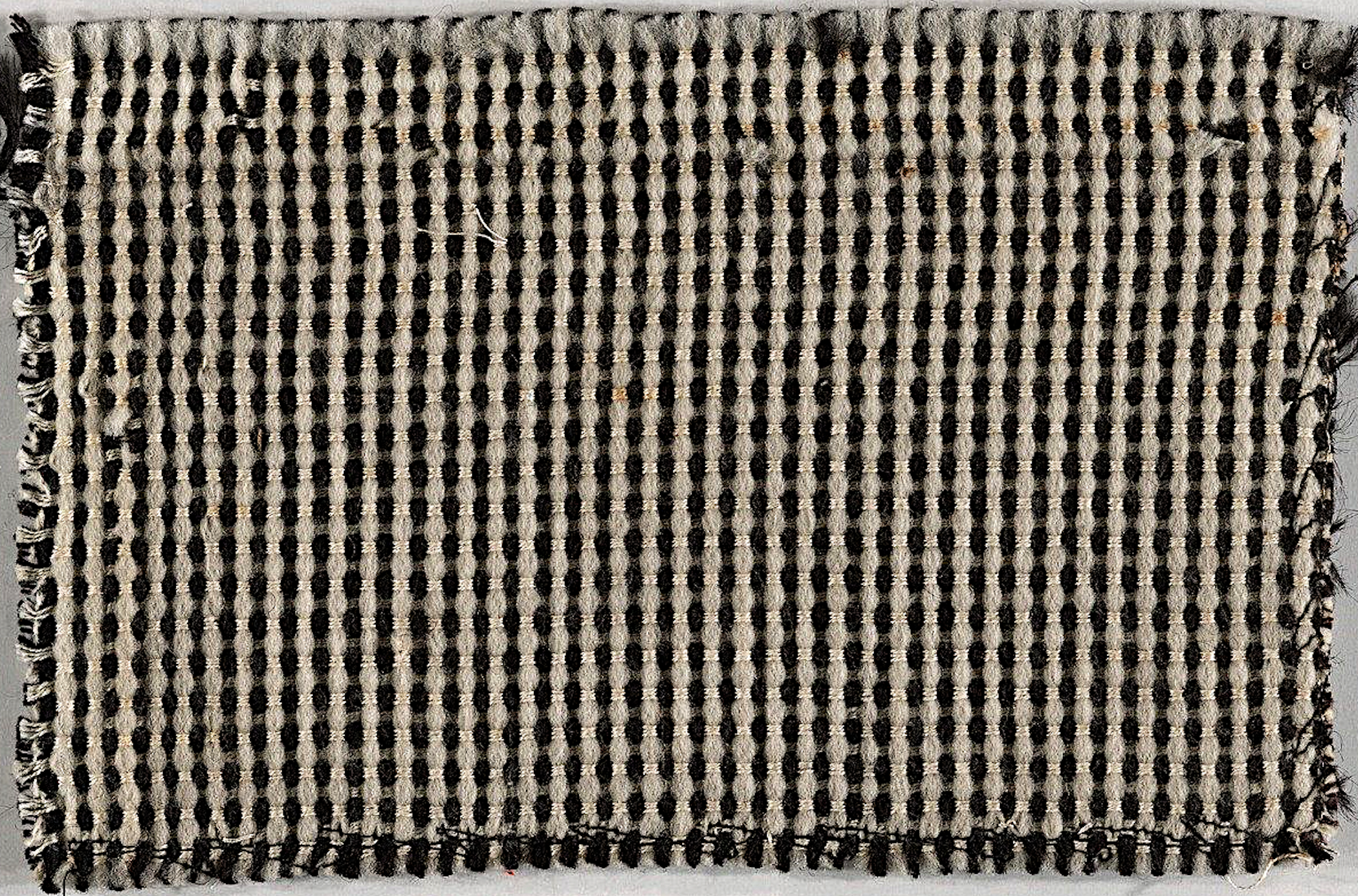
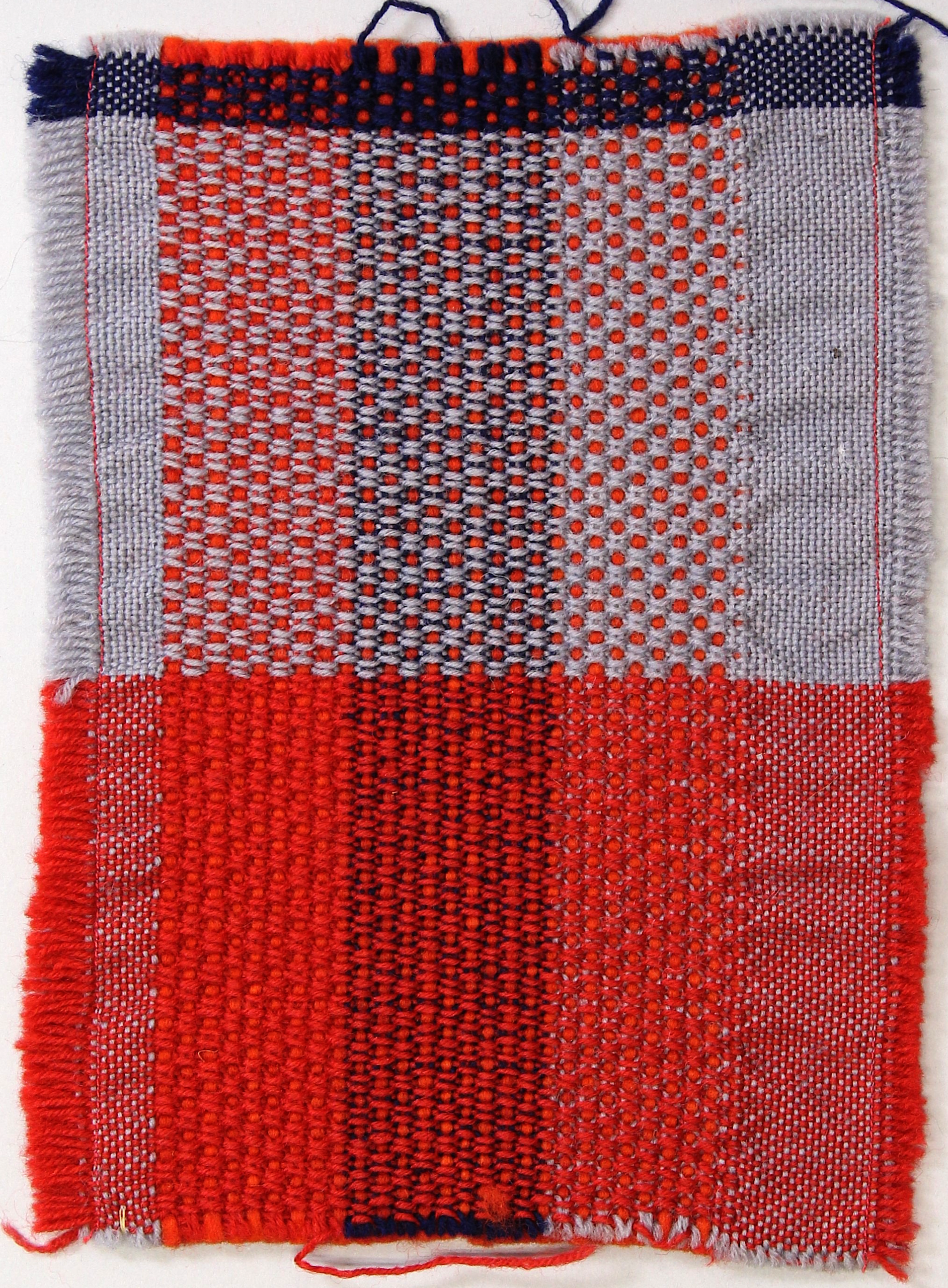
Two years later, following his appointment as Jungmeister, or “Young Master”, the weaving course came under his supervision, becoming the most financially successful workshop in the Bauhaus.

Gunta, regarding the development of the weaving workshop in 1931, describes the years in Weimar:
“We turned our attention to weaving. The content and the goal, even in this new field of work, was the “mural”, the tapestry. Yet there was a fundamental difference: whereas we had previously combined existing and fixed values into a unitary whole, we have now arrived, so to speak, at the very source of the elements that give rise to the woven surface. We didn’t need to worry about the miserable remains of a tapestry painting tradition, because before us opened up a vast field of experimentation.”
Gunta, therefore, translates experiences, insights, and sensibilities into a continuous process of innovation and research, placing matter, measurements, shape, and color at the center. The latter, besides changing according to the material that accommodates it and representing a real challenge, was the starting point for experimenting with new approaches that naturally led it towards the weaving technique. This transition also materializes thanks to the replacement of the high-warp loom with the low-warp one, a decisive turning point in terms of expressive possibilities: with its support, Gunta is able to explore with greater freedom the creative potential that weaving offers it.
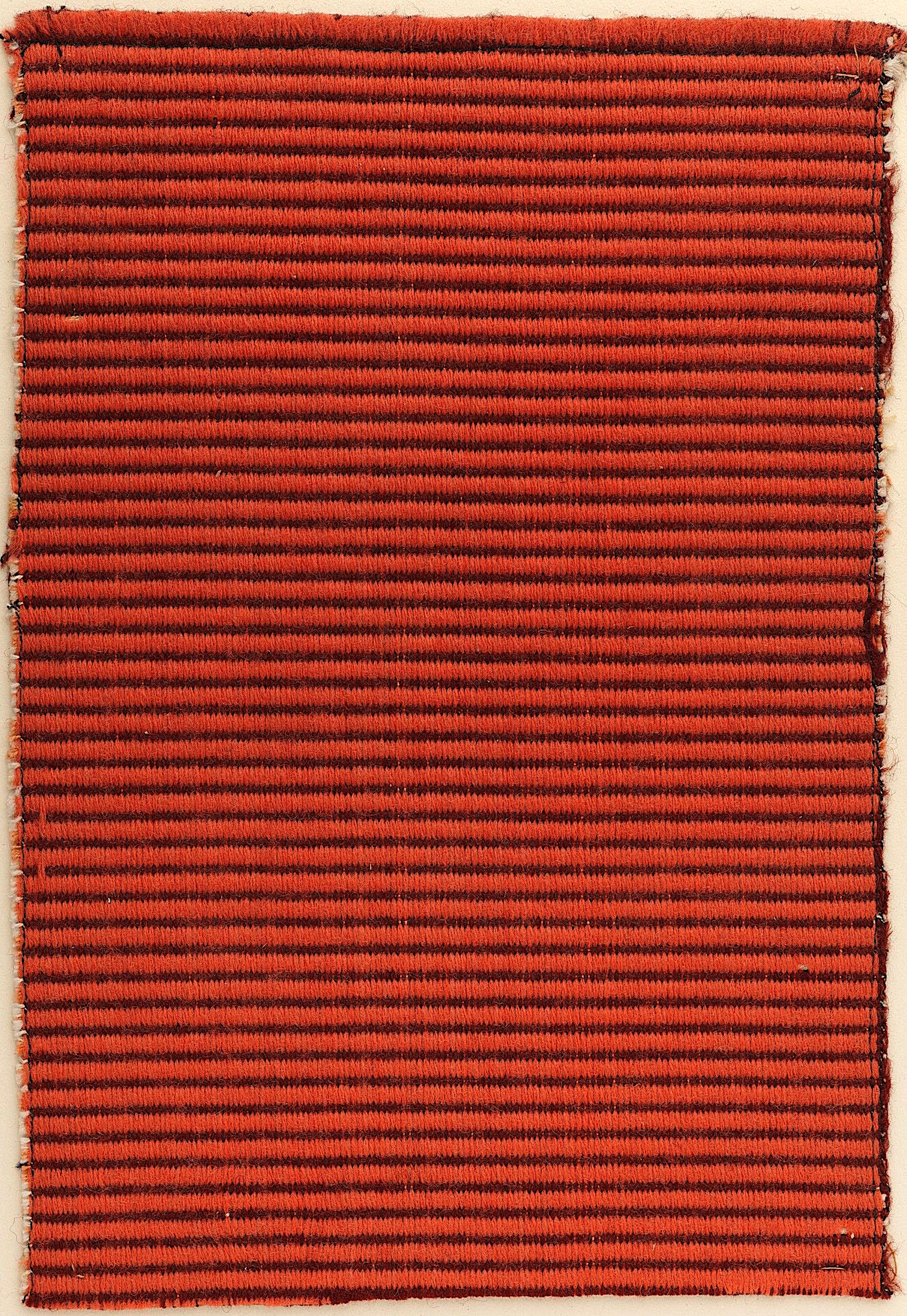
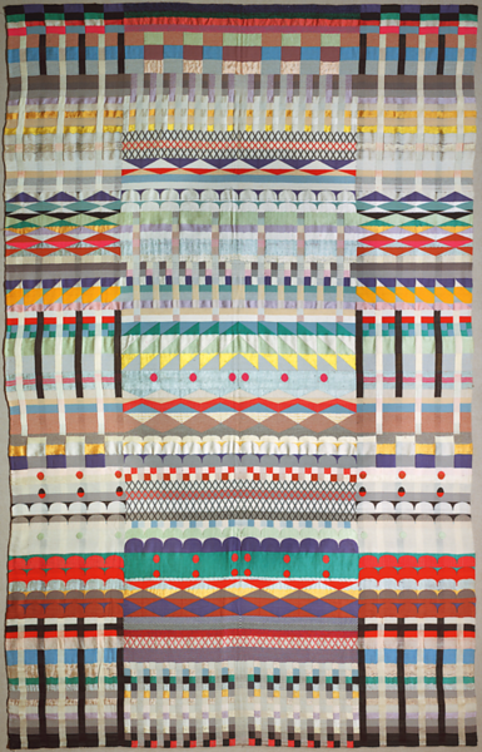
Between 1927 and 1928 Gunta carried out the first experiments with the Jacquard loom which, unlike traditional looms, allowed her to have autonomous control over each individual thread of the warp. Using this technique he creates the “5 Chöre” tapestry.
Research and experimentation do not stop and his career develops between blankets, clothing, upholstery, wall coverings, curtains, carpets and tapestries.
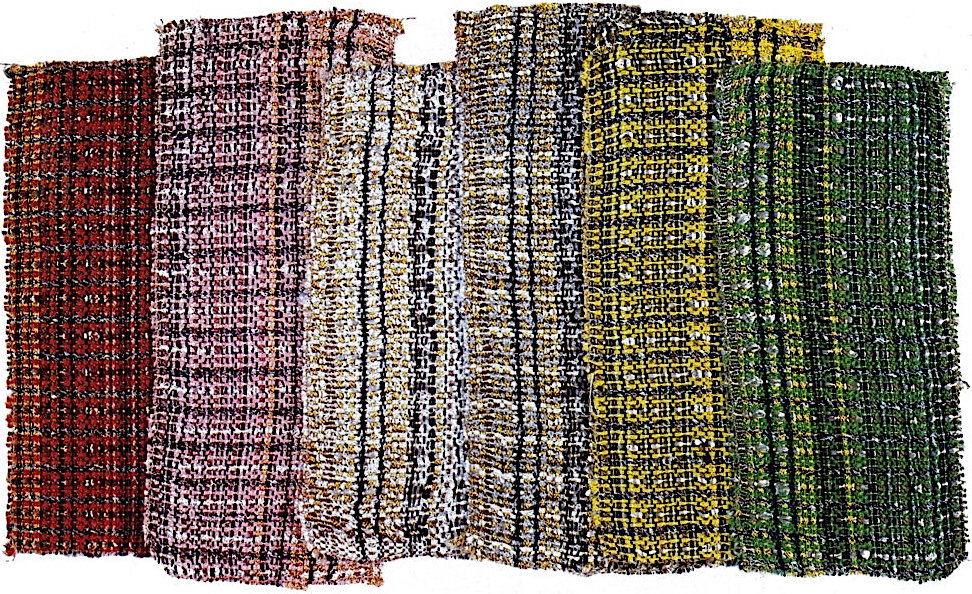
Plot: White and pink viscose; White, green, yellow and pink cotton, Plain weaving
Six colors, from left: Brown, Pink, White, Gray, Yellow, Green, 1930
17 x 7.3 cm
The 1930s continued amid political intrigues that on the one hand forced her to resign from her role as management of the weaving course and the birth of S+H Stoffe, an independent manual weaving workshop that in 1937 received honorary recognition from the Paris International Exhibition.
For 46 years Gunta established a dense network of contacts with companies and customers, becoming one of the main producers of fabrics and fabrics in the area.
In the 1940s, she falls in love with journalist Willy Stadler and acquires Swiss citizenship after their marriage. This is also a golden period in her professional life: during the 1950s and 1960s, the textile workshop, renamed Flora Handweaving Mill in the late 1930s, employs between three and five staff members and collaborators. It closes permanently in 1967, giving Gunta the space and time to devote herself exclusively to creating artistic tapestries.
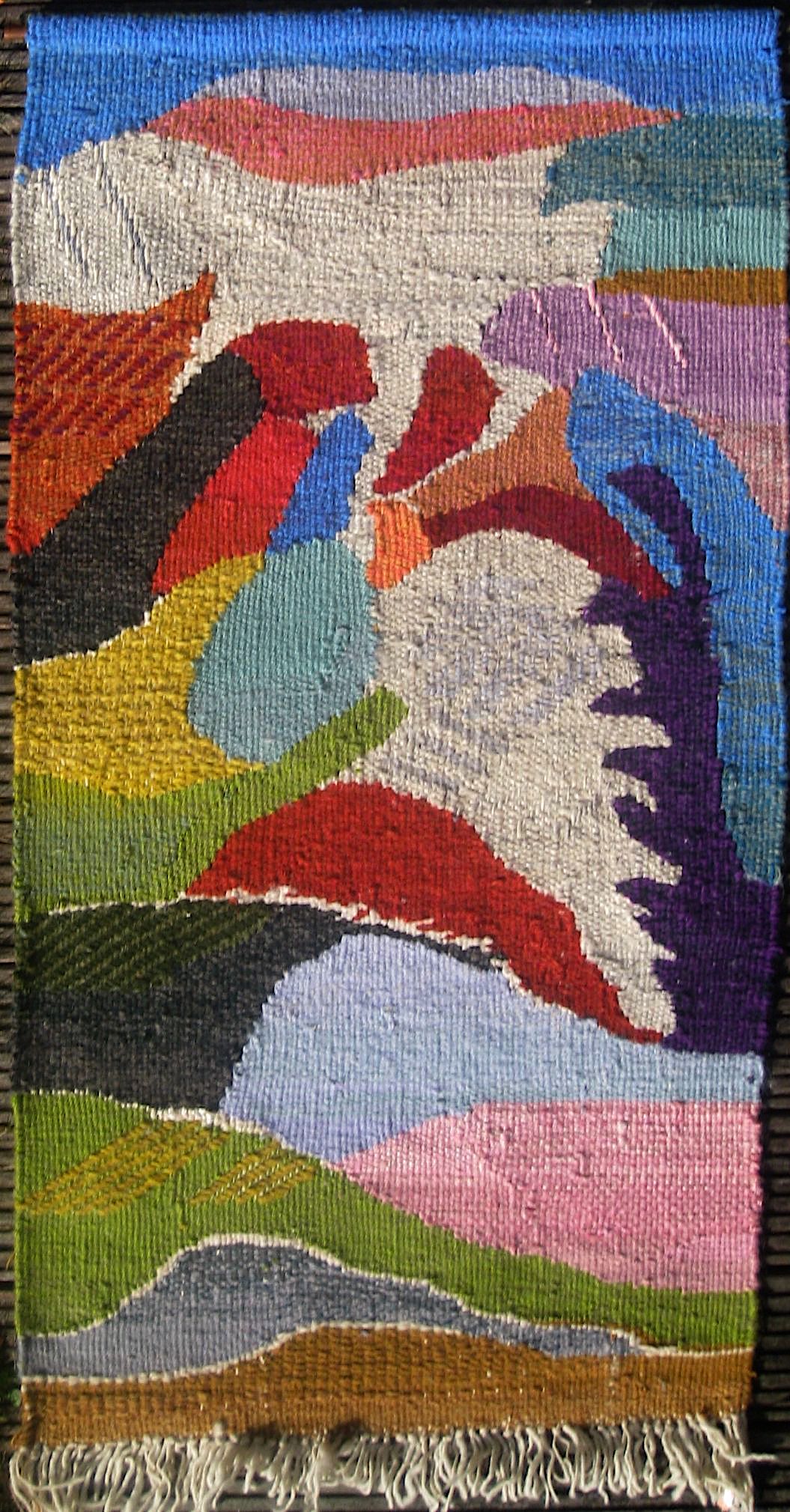
In the last years of his life Gunta participated in numerous exhibitions and solo exhibitions in Switzerland and some works were recognized as among the most significant and symbolic for the famous exhibition “50 Years Bauhaus”.
The artist died in Zurich at the age of 86.

May 5 – July 28, 1968
The collaborations
Prominent artists and designers were impressed by Gunta’s resourcefulness and innovative vision. Among the most revolutionary collaborations we remember that with Marcel Breuer, architect and designer of the famous Wassily armchair, considered one of the greatest exponents of the Bauhaus school.
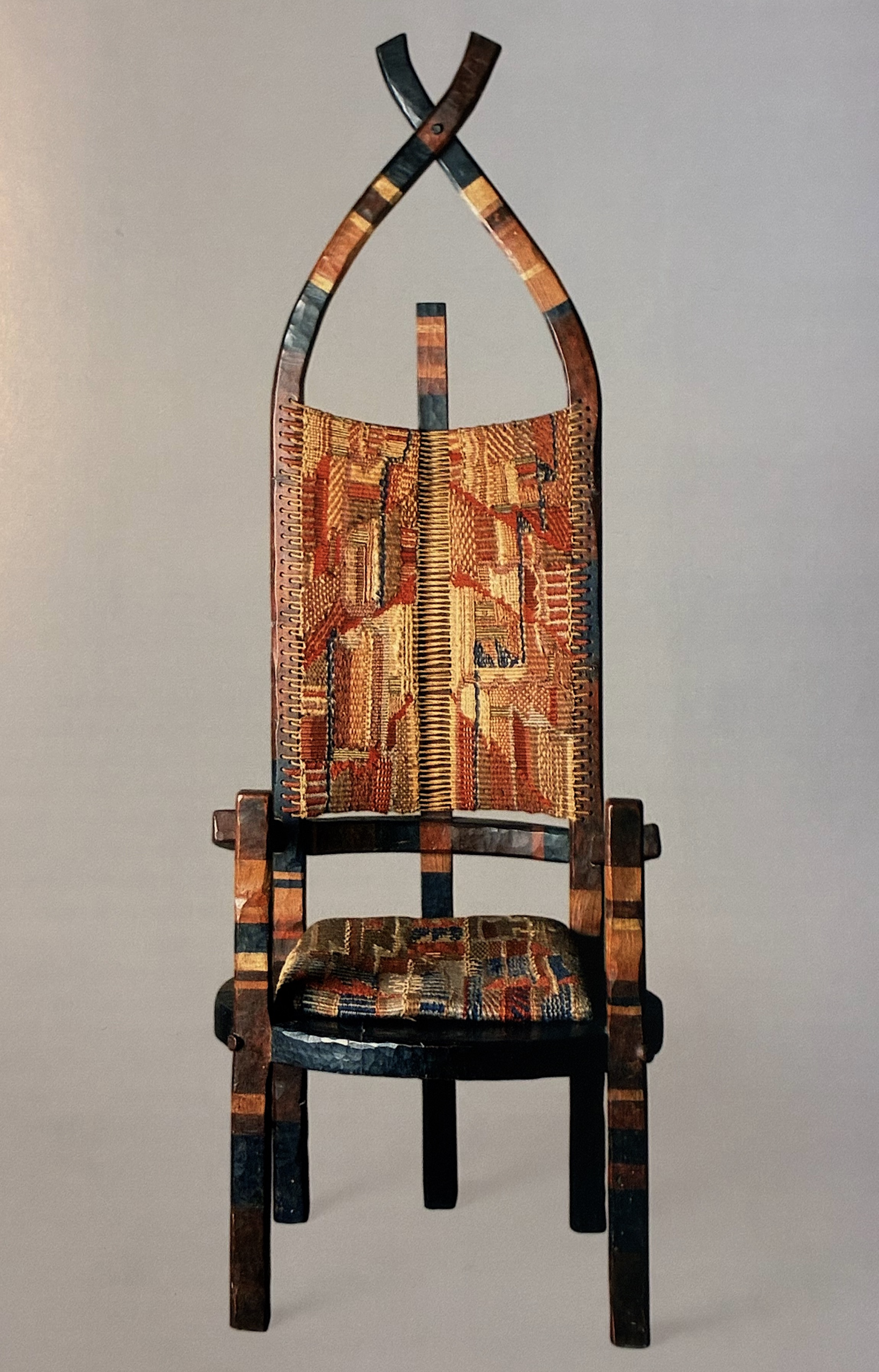
The two combined their creative talents to produce the African Chair. Believed lost for over 80 years, it was rediscovered in 2004. Crafted from wood and woven textiles incorporating cotton, wool, hemp and silk, the chair features intricate details in blue, red, yellow and gold that echo the colours of its materials.
Gunta recalls the collaboration in a letter from him in 1964, saying:
“That was the first time we worked together. I made the fabric. I threaded and stretched the warp directly through the holes in the loom and weaved the weft on the chair itself… the shapes were invented freely and without repetition (…)”